

FAQs

What is the purpose of the OLWC?
The Ogallala Land & Water Conservancy (OLWC) is a nonprofit organization based in Clovis, N.M. dedicated to conserving the groundwater resources of the Ogallala Aquifer. Through our voluntary, market-based model, we negotiate conservation easements and lease agreements with farmers, ranchers, and landowners to protect the long-term water supply for Eastern New Mexico, including the mission-critical needs of Cannon Air Force Base and its operational range.
What is the Ogallala Aquifer, and why is it so important?
The Ogallala Aquifer is an underground water source that stretches across eight states from South Dakota to Texas. It is one of the largest groundwater aquifers in the world, supporting 20% of the United States’ agricultural harvest. In New Mexico, it covers much of the eastern part of the state including Curry, Roosevelt, and Quay Counties. Nearly all farmers, ranchers, businesses and residents throughout the region rely on the Ogallala for their water supply. Irrigation for crops, including wheat and alfalfa, consumes 95% of the available groundwater in Curry County while 5% is used for municipal water supply - which includes the entire city of Clovis. If water consumption continues at this current rate, Curry County has 50 years, at most, before the groundwater supply is completely depleted. But for every 1 year of irrigation water we conserve, we protect 4 years of water supply for the City of Clovis alone.
As a finite, non-replenishing water source, the Ogallala faces critical depletion due to intensive irrigation farming, prolonged drought, and increasing climate change. Because the region’s agriculture-based economy requires widespread irrigation, the aquifer is depleting faster than it can be recharged. Between 2017 and 2022, 20% of the groundwater was lost, exacerbating the water crisis. If current trends continue, the aquifer could be functionally depleted by 2028. This could mean economic catastrophe for the region, including for Cannon Air Force Base and Melrose Air Force Range—which are critical to our national security and Eastern New Mexico’s economic success and stability.
How do landowners benefit from the OLWC?
Landowners are the heartbeat of the OLWC and who we primarily serve. We negotiate conservation easements and water right lease agreements on their behalf to ensure they receive fair compensation, retain land ownership and maintain a domestic water supply while retiring their irrigation wells and transitioning from irrigated farm and ranchland to dryland cropping, pastureland or grazing. We do this through voluntary landowner participation - emphasizing a local, landowner-driven model that operates with values of trust, transparency, flexibility, and financial certainty. OLWC and our partners support landowners with technical resources and planning assistance, and in most cases, the legal services, appraisals and due diligence related to the conservation easement transactions are covered.
What is the OLWC model and how does it work?
A unique aspect of our work is giving landowners the ability to start small and take it one step at a time. Phase 1 is a trial period and involves water lease agreements where landowners receive annual compensation for voluntarily retiring their irrigation wells for a three-year term. During this phase, irrigation wells are metered to determine annual groundwater use and the groundwater value is then appraised using 3-year crop budgets, fair market data, and future anticipated land use (dryland cropping, pastureland or grazing). Landowners retain enough water to meet their household supply use and to provide for livestock watering. Phase 2 involves negotiating voluntary conservation easements that retire a landowner’s irrigation water in perpetuity (permanently), guaranteeing them a long-term funding source. After Phase 1, a landowner can re-assess without committing themselves to anything permanently, and if they decide the relationship is not for them, they can simply opt-out.
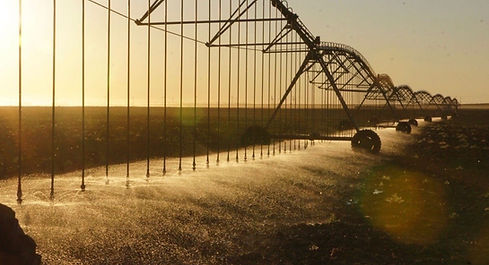
Water Right Lease Agreement payments are based on an appraised value of groundwater production capacity (gpm). An average water right lease agreement payment example for landowners is $250 per gallon per minute (gpm) x the initial 1,650 gpm of annual water production capacity = $1,237,500 over the 3-year term or $412,500 annually.

.jpg)


How is land ownership affected? Do I have to sell my land or water rights to participate?
Land ownership never changes with a conservation easement or water rights lease agreement. Instead, these financial tools are used to compensate landowners for retiring their irrigation wells to protect the long-term health of the Ogallala Aquifer. The process is completely voluntary and landowners always retain their water and private property rights, including deeds, titles, mortgages, etc.
For our purposes, OLWC negotiates conservation easements to protect the long-term health of the Ogallala Aquifer and compensate landowners to retire their irrigation water rights. In most cases, the legal services, appraisals and due diligence are covered by OLWC and our partners.
It is also important to note that our agreements do not require land to be taken out of production. Instead, landowners receive technical resources and planning assistance from local conservation experts to transition from irrigated farm and ranchland to dryland cropping, pastureland, or grazing using healthy soil principles. This approach protects our agricultural heritage and allows farmers and ranchers to continue producing crops such as sorghum, hay grazer, silage, or dryland wheat—without reliance on irrigation water—thereby conserving groundwater and extending the life of the Ogallala Aquifer.

Who is involved with the OLWC and how is it funded?
OLWC is honored to partner with local, state and federal government entities, nonprofit organizations and philanthropic donors. We are funded through a variety of grants, matching funds and private donations.
What is OLWC’s connection to Cannon Air Force Base, Melrose Air Force Range and the U.S. government?
OLWC is proud to partner with our local military installations and the U.S. government to protect the long-term water supply needs for Eastern New Mexico. Cannon Air Force Base in Curry County and Melrose Air Force Range in Roosevelt County provide important benefits to our national security and our local economies. These military installations rely on water supplies from the Ogallala Aquifer, which is rapidly depleting, and lack of water is a critical issue that threatens their operations and mission readiness. OLWC acts as a liaison between landowners and serves as the point of contact for more than 27 different partners to carry out sustainable groundwater conservation projects.
Our lease agreements are funded in part by the U.S. Department of War's Readiness and Environmental Protection Integration (REPI) Program and the U.S. Department of Agriculture’s Regional Conservation Partnership Program (RCPP). Our partnership covers 34,071 acres in an area known as a paleochannel west and northwest of Cannon Air Force Base. In 2024, Cannon Air Force Base was one of four military installations nationwide to receive the Air Force Community Partnership Award for improving the quality of life for airmen, guardians, and families through its work with OLWC.
How did the OLWC get started and why was it formed?
The idea for OLWC came through strategic water planning by proactive leaders who were searching for ways to protect the region’s long-term water supply. This included landowners themselves, who knew the health of the Ogallala Aquifer was in danger and wanted to help preserve the area’s agricultural heritage.
After extensive groundwater aquifer mapping and monitoring was commissioned in 2012, the City of Clovis adopted a Master Water Assurance Plan in 2017, which included the idea of water banking through a land and water conservation trust model. The OLWC was formed in 2021 to act as a liaison between landowners and funding partners to carry out sustainable groundwater conservation projects.


What is the overall goal for the OLWC and what is its progress to date?
The overall goal of the OLWC is to extend the life of the Ogallala Aquifer in Eastern New Mexico by at least 50 years to supply the region’s long-term water needs. Our current project area includes more than 34,000 acres. Based on current projects, we need to retire an additional 17,000 to 20,000 additional irrigated acres to meet the water supply for Cannon Air Force Base, the City of Clovis, and nearby rural communities through at least 2075. While not a small goal, we believe we can achieve it in the next 8 to 10 years through our continued partnerships.
To date, OLWC has secured voluntary conservation easement agreements with 10 landowners, metered and retired 56 irrigation wells and transitioned 11,120 acres to non-irrigated uses. As a result, 12,859 acre-feet of water has been retired, representing more than 12 billion gallons saved.
Why is the OLWC necessary when the Ute Pipeline Project is being built?
The Ute Pipeline Project is one of several important strategies to meet Eastern New Mexico’s long-term water needs, but it cannot replace the groundwater supply that the Ogallala Aquifer provides. As scientific studies show, the pipeline will not be able to deliver sufficient water during periods of extreme or prolonged drought. There is also a critical “gap” between the anticipated delivery of surface water (2030-2031) from the Ute Reservoir and the immediate need for a supplemental groundwater reserve to provide at least a 3-year water supply for the local water utility, EPCOR, to ensure reliable delivery to end users until the surface water arrives.
As a finite and non-replenishing water source, the Ogallala faces critical depletion, with more than 20% of the groundwater already lost between 2017-2022. If we do not accelerate groundwater conservation efforts to protect this water supply, it could be functionally depleted by 2028. This could mean economic catastrophe for the region, including for Cannon Air Force Base and Melrose Air Force Range—which are critical to our national security and Eastern New Mexico’s economic success. If water consumption continues at its current rate, Curry County has at most 50 years before the groundwater is completely depleted. But for every one year of irrigation water we conserve, we protect four years of water supply for the City of Clovis alone.